Crawl Space Water Extraction in Georgetown, TX
The floor in the back bedroom has felt soft since spring, the house smells like a damp cellar when the air conditioning kicks on, and when you finally pulled the skirting off and shone a light under the house, the light reflected back off water. This site connects you by phone with an independent local provider who pumps out and dries the crawl spaces under Georgetown's pier-and-beam homes.
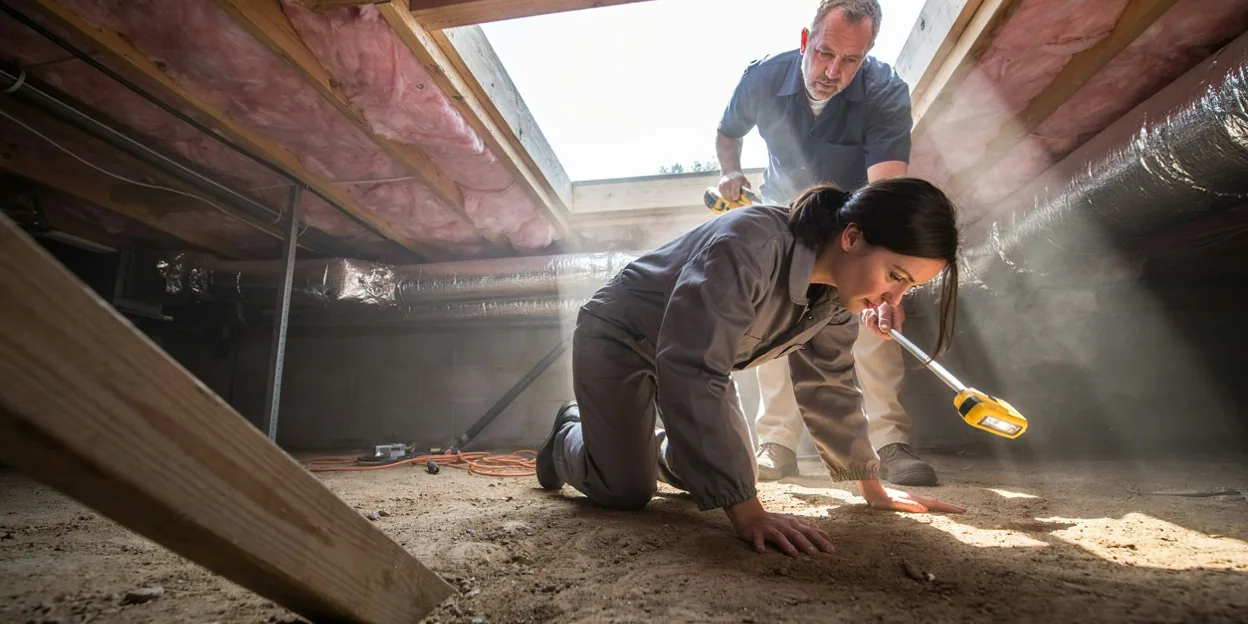
A light, a meter, and a look at every joist
The crew goes under the house first, not last. They pump out any standing water, then meter the joists, the beams, the underside of the subfloor, and the piers themselves, and they compare those numbers to a dry section at the far end of the house. Wet insulation stapled between the joists comes out. If a supply or drain line under the house is the source, they say so before anything else happens, because drying under an active leak is wasted effort.
Once the water is out, air movers go under the house and a dehumidifier pulls the moisture out of the space, with the vents and the access sealed so the crew is drying the crawl space and not the whole neighborhood. The readings get logged until the wood is back to normal.
Pull the skirting back and do not crawl in
Turn the water off at the meter if a plumbing line under the house is the likely source. Open the crawl space access or pull a panel of skirting so air can move. Do not crawl in on your own; the ground under an old house can hide an open sewer cleanout, a live wire, or a nest of something. Photograph what you can see from the opening. Then call.
Framing dries, insulation and cardboard do not
Joists, beams, and the underside of a pine or plywood subfloor dry in place if the water has not sat for months. Fiberglass batts under the floor come out and get replaced after drying. Anything stored under the house on the ground is usually a loss. The floor above gets its own reading: if the pine boards upstairs are cupping, hardwood floor drying handles them from the top while the crawl space dries from the bottom.
If the water came from a drain line, the crew treats the ground under the house as contaminated and sewage cleanup rules apply. If it came from a washer or a supply line inside the house and ran through the floor, water extraction upstairs and crawl space drying below are the same job.
Why Old Town houses hold water under the floor
Georgetown's oldest neighborhoods, the Belford district, University Avenue, and Olive Street, were built from the 1870s through the 1930s on cedar posts and stone piers with a foot or two of air under the floor. The long-leaf pine floors in those houses are one reason people buy them, and pine is also porous enough to pass a washer flood or a burst supply line straight through to the dirt below.
The ground under those houses is limestone on the west side and clay on the east. Limestone lets water drain toward the cave systems that run under this part of the county, including the one at Inner Space Cavern on the south edge of town, discovered by a highway core-drilling crew in 1963. Clay does not drain at all. A crawl space over clay holds a puddle until someone pumps it, and the shade under the house keeps the wood damp through a summer that dries everything else.
Older houses also carry older plumbing. A cast-iron drain line under a 1910 house or a galvanized supply line spliced to copper in the 1970s is a common source, and the crew should tell you which line failed before drying starts. If foundation piers have shifted from the wet clay, that is a separate contractor, and the rebuild after drying is water damage reconstruction. Repairs to plumbing in the historic districts need a city permit, and anything visible from the street needs design review.
Say what you saw under the house
Have the address ready and say how much water is under the house, whether it is standing or just damp, whether you smell sewage, and whether the floor above feels soft. Mention if the house was empty. Call (512) 399-1654 and we put you through to a local provider serving Georgetown and northern Williamson County.