Frozen Pipe Cleanup in Georgetown, TX
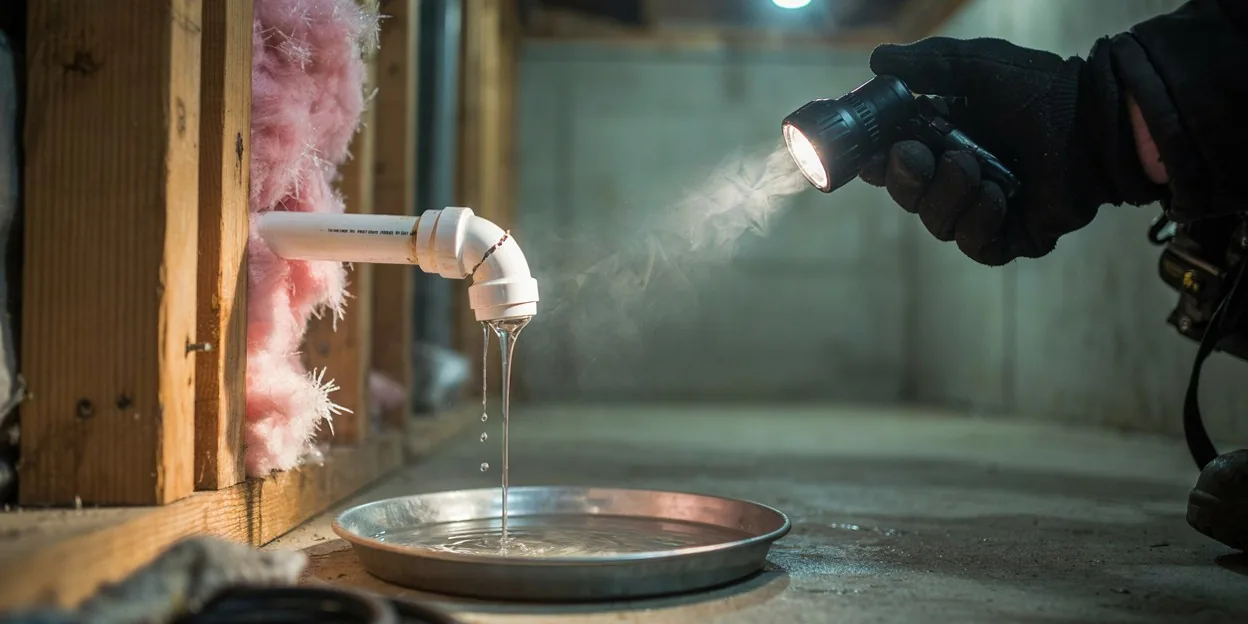
The power came back on Wednesday afternoon, the house warmed up, and by dinner there was water dripping through the light fixture in the hall. This site connects you by phone with an independent local provider who cleans up after freeze-split lines in Georgetown and the towns around it.
How long did it run, and where did it land?
Those are the two questions the crew answers before any drying gear comes off the truck. A copper or PEX line in an attic splits while frozen and does nothing until the thaw, so the water usually starts running while nobody is watching. It soaks the insulation, drops onto the ceiling drywall, runs down the inside of the wall below, and pools on the floor at the bottom plate.
The crew traces that path with a meter and a thermal camera, from the split down to the floor, and then into the rooms on either side of the wet wall. A ceiling that is sagging gets drained through a small hole before it lets go on its own. Wet insulation comes out because it does not dry in place. Air movers and dehumidifiers go where the readings say, and the readings get logged until the framing and drywall reach their target.
Shut the meter, drain the lines, and stay off the ladder
Close the valve at the meter box, then open the lowest faucet in the house to drain what is left in the lines. Turn off the breaker for any room where water is coming through a fixture. Do not poke a sagging ceiling and do not go up into the attic on wet insulation. Photograph the drip, the stain, and the floor. Then call. The plumber repairs the split; the drying crew handles the building around it.
Ceiling drywall out, framing dried, floors metered
Ceiling drywall that held water usually comes down, and the insulation above it goes with it. Wall drywall below a split is a maybe: caught the same day it often dries with the baseboard off, but a wall that ran for two days while the house was empty gets opened. Wood floors under the wet wall get metered before anyone decides. If they are cupping, hardwood floor drying may save them.
Once the water is off the floor, the rest of the job is water extraction and drying by the readings. If the house is pier-and-beam, the water that went through the floor gets handled by crawl space water extraction.
February 2021, and why attics here are where lines split
Georgetown builders put supply lines in attics because the slab leaves nowhere else, and an attic in a Texas house is not insulated on the roof side. In the February 2021 freeze the temperature stayed below freezing for days while the power went out in rotating blocks, and lines split in attics from Old Town to Sun City. The city's own water plants froze at the pumps, a 16-inch main broke in Mayfield Ranch, and much of town spent the week under a boil notice.
Freezes here are short and rare, which is exactly the problem. Nobody drains the lines, and hose bibs on north-facing walls freeze first. Outside the city limits, many homes take electric service from Pedernales Electric Cooperative rather than the city, so an outage there can run on a different schedule from the neighbors across the road, and a heated attic can go cold while the rest of the street stays warm.
A split line is the kind of sudden loss many Texas policies respond to, though a house that was left unheated can draw questions. Ask the crew to photograph the split before the plumber cuts it out, and to log how long the water ran. When the drywall goes back, the rebuild is water damage reconstruction, and a plumbing repair in the city needs a permit.
Call about the drip that started when the house warmed up
Have the address ready and say where the water came through, whether the meter is off, whether the house was empty during the freeze, and whether a plumber has been called. Call (512) 399-1654 and we put you through to a local provider serving Georgetown and northern Williamson County.