Flood Cleanup in Georgetown, TX
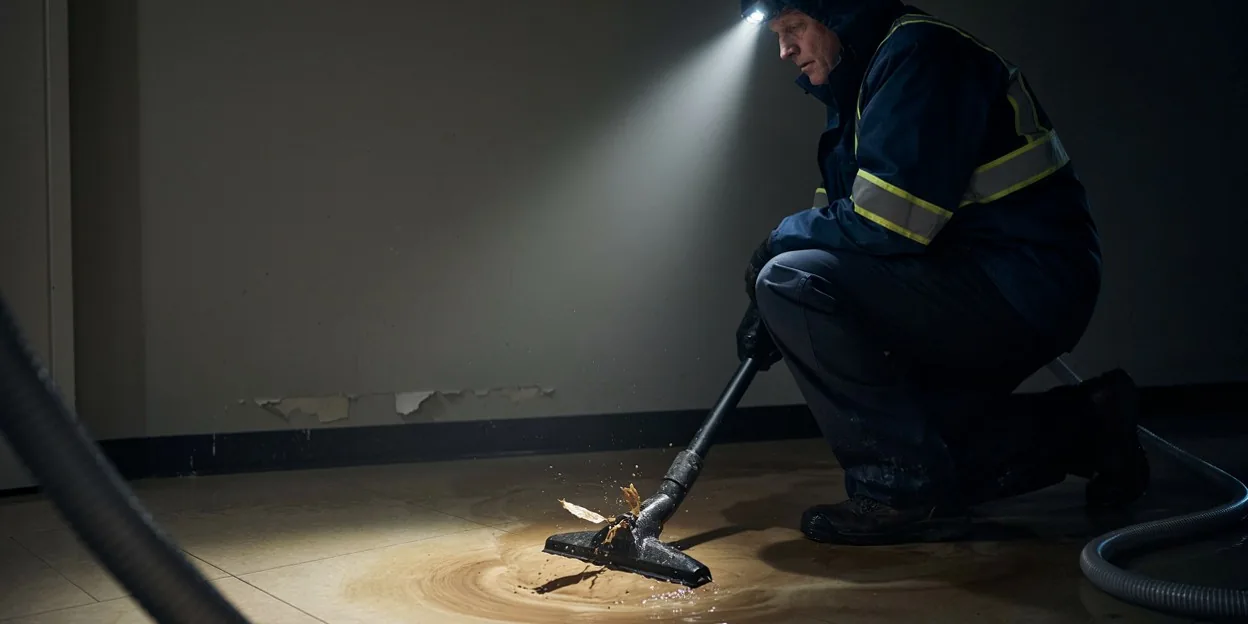
The river was three feet below the bank at breakfast and in the garage by lunch, and now that it has gone back down there is a line of silt on the drywall a foot off the floor and a smell that was not there yesterday. This site connects you by phone with an independent local provider who cleans up after river and flash-flood water in Georgetown and northern Williamson County.
Mud out, contaminated material out, then the drying starts
The crew treats river water as contaminated from the first minute, because it is. It carried silt, fuel from the road, fertilizer from the fields upstream, and whatever the lift stations and storm drains let go of when they went under. They shovel and pressure-wash the mud off the slab first, then pull the porous materials the water touched: carpet, pad, the bottom of the drywall, insulation, baseboard, and cabinet bases. All of it goes out under containment.
With the contaminated material gone, they clean and disinfect the framing and the slab, and then the drying begins the same way it does after a pipe leak, with air movers, dehumidifiers, and daily readings. The difference is that nothing porous gets a chance to dry in place. Photos before and after removal go in the file for the adjuster and for the flood policy, which is usually a separate claim.
Wait for the water to drop, then power off before you go in
Do not go into a flooded room until the water has gone down and the power to that part of the house is off at the breaker. Wear boots and gloves; the mud is not clean. Open the garage and the doors so air moves. Photograph the high-water line on the wall in every room before anyone starts shoveling, because that line is what the adjuster and the flood program use. Then call.
Slabs and framing stay; everything soft leaves
Concrete slabs, tile, and framing lumber clean up and dry. Sealed brick and stone clean up. Drywall comes out above the water line, carpet and pad leave, and hardwood that sat in river water usually leaves too, no matter how well it might have dried after a clean leak. Cabinets built of particleboard leave; solid wood cabinets that only got wet at the toe kick are a judgment call.
Appliances that were under water are usually done. Contents get sorted room by room: hard, non-porous items clean, upholstered and paper items generally do not. Once the house is stripped and dry, the rebuild is water damage reconstruction. If the flooding also backed up the drains, and it often does, sewage cleanup rules apply to the bathrooms.
The San Gabriel in July 2025, and the creeks that do not make the news
Georgetown is a river town, and the river rises fast. On July 5, 2025, the San Gabriel climbed roughly 30 feet in a morning, from under four feet at the gauge to nearly 36. It put San Gabriel Park, Blue Hole, and the Heritage Community Garden under water, forced the Two Rivers and Waters Edge apartments to evacuate, broke a water main in the riverbed, and closed the South Austin Avenue bridge for inspection. The city's early damage estimate was 9.6 million dollars, and Georgetown Parks and Recreation hauled thousands of cubic yards of debris out of San Gabriel Park alone that month.
The smaller water is just as wet. Berry Creek, Pecan Branch, and Smith Branch cross the neighborhoods north and east of downtown, and a hard storm over Blackland clay runs off instead of soaking in. Memorial Day 2015 put flash flooding across Williamson County from the same storm that hit Wimberley. Homes at the bottom of a cul-de-sac in Crystal Knoll or along the low side of a street in Old Town get street runoff through the garage before any creek is out of its banks.
Flood water is excluded from nearly every Texas homeowner policy. Coverage, when there is coverage, comes from a separate flood policy, and that claim wants the high-water photos, the room-by-room inventory, and the crew's removal log. The drying that follows is ordinary water extraction work, and a pier-and-beam house that took river water needs crawl space water extraction as well, because the water under the house does not drain when the river does.
Call once the water is back in the river
Have the address ready and say how high the water got, which rooms it reached, whether the power is off, and whether it came from the river, a creek, or the street. Say if the drains backed up too. Call (512) 399-1654 and we put you through to a local provider serving Georgetown and northern Williamson County.